How Much Does an Interior Designer Cost in Melbourne?
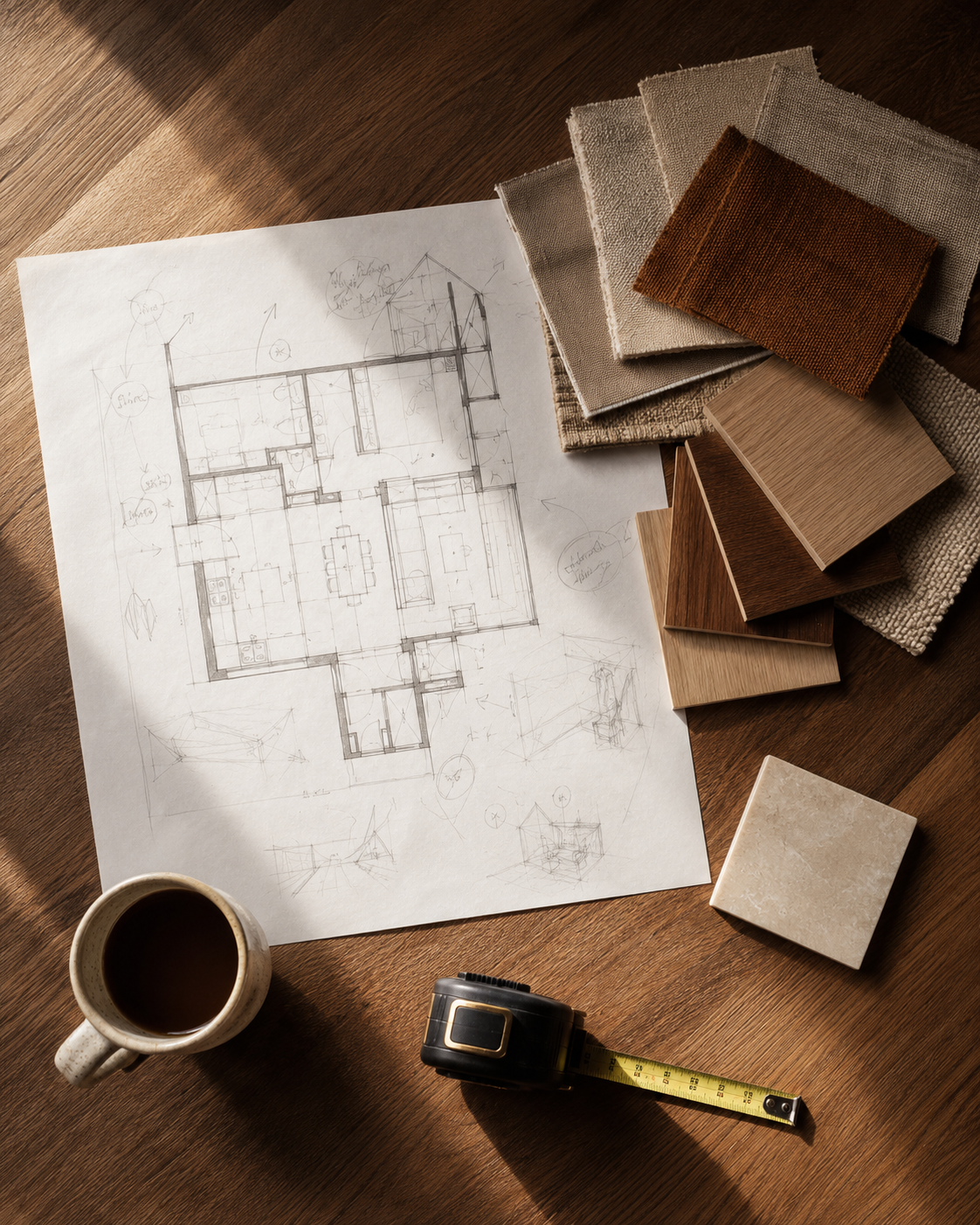
In Melbourne, interior design fees generally range from around $250 for a single consultation to $100,000 or more for a full home renovation, depending on how the designer charges (hourly, fixed fee, per room, or a percentage of your project) and how much of the process they're involved in.
If you've searched this question, you've probably noticed the industry doesn't make it easy to answer. Websites are full of beautiful projects and very few numbers. That's frustrating when you're trying to work out whether a designer even fits into your renovation budget in the first place.
I can't give you an exact figure without understanding your project, and any designer who does before seeing your home or hearing your brief is guessing. But I can give you something more useful than a guess: a clear picture of how Melbourne interior designers actually charge, what moves the number up or down, and what you should expect to get for your money at each level of investment.
Figures throughout this article are indicative only, gathered from published Australian interior design pricing guides. They are not quotes and shouldn't be treated as a formal proposal from any designer, including me.
How Melbourne Interior Designers Charge
Most Melbourne interior designers use one of a handful of fee structures, sometimes combined. None is inherently better than the others. What matters is whether the structure fits your project, and whether you understand it before you sign anything.
| Pricing method | How it typically works | Best suited to |
|---|---|---|
| Hourly rate | Billed for time spent. Melbourne rates commonly range from about $120 to $300+ per hour depending on experience | A single consultation or a small, open-ended task |
| Fixed (flat) fee | One agreed price for a clearly defined scope of work | Clients who want budget certainty for a set project |
| Percentage of project cost | A percentage, commonly 10% to 20%, of the construction and/or furnishing budget | Larger renovations with ongoing designer involvement |
| Fee by room or stage | Priced per room, or per phase of the design process | Renovations tackled room by room, or staged over time |
| Combination fee | A fixed fee for core deliverables, plus hourly billing for extras | Full-service projects with a defined core scope and some open-ended elements |
A few extra charges are worth asking about upfront, since they don't always appear in a headline fee. Many designers charge a procurement fee or purchasing commission on furniture and fixtures sourced on your behalf, commonly 10% to 30% added to the trade price, separate from the design fee itself. Because the designer is often buying below retail in the first place, trade access can offset some or all of that margin, so it's worth asking rather than assuming it's a straight markup on top of what you'd pay yourself. Travel fees can apply for site visits outside a designer's usual area, though eDesign services (mine included) are generally built to work with clients anywhere in Australia without one. And most packages include a set number of revisions, commonly two or three rounds per moodboard or concept, with anything beyond that billed as additional work.
What Does an Interior Design Consultation Cost?
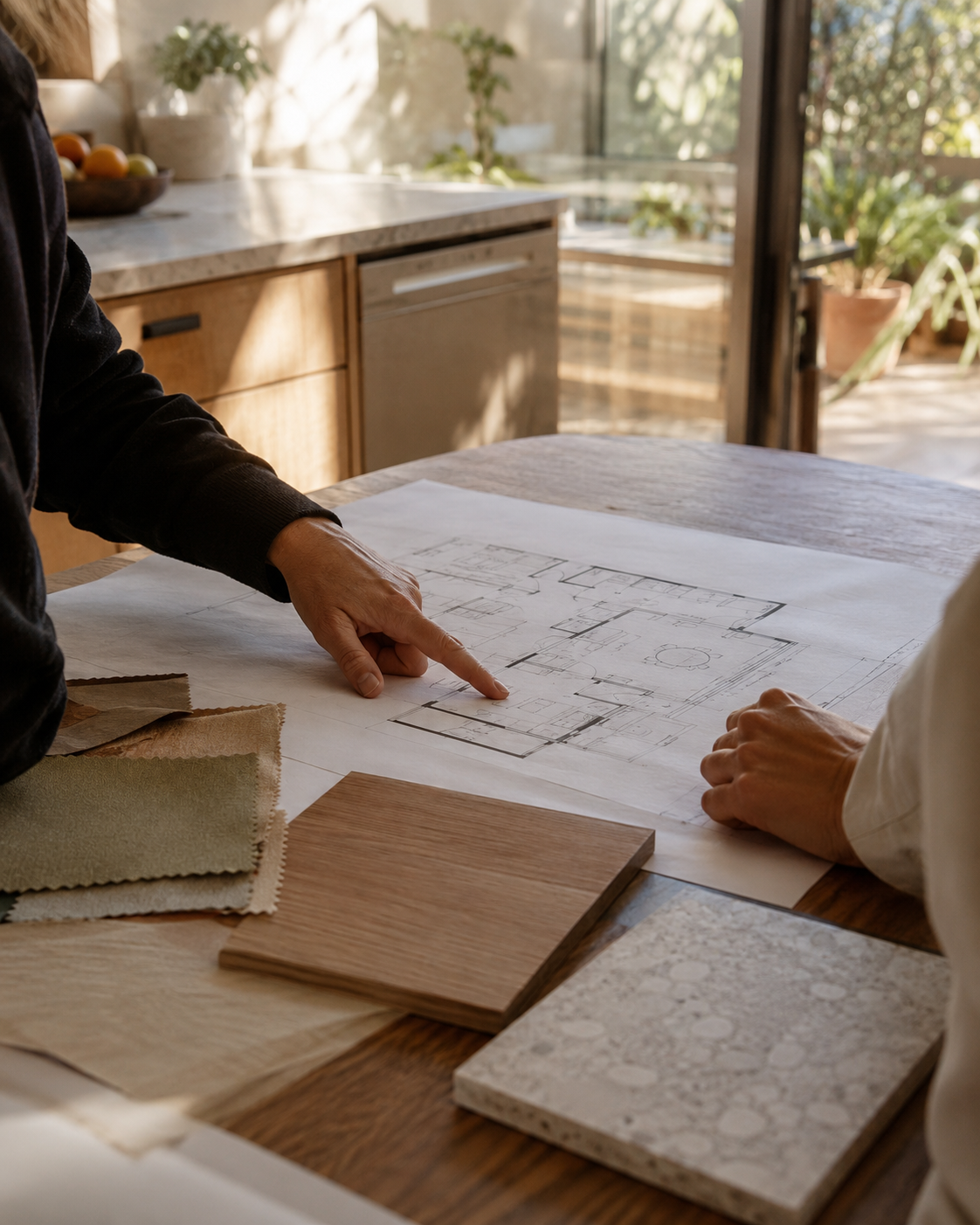
A one-off consultation is usually the cheapest way to get a professional opinion on your space, and a sensible starting point if you're not yet sure whether you need full design services.
Across Melbourne, a single paid consultation typically costs somewhere between $250 and $800 for a session lasting one to three hours, sometimes with a written summary included afterwards and sometimes without. As an example, my own Design Direction Session runs for two hours, in your home or over video, and is priced at $530, with a follow-up summary of prioritised recommendations included. It's built for people who need direction on what to tackle first, not a full design package.
Some studios, mine included, also offer a free introductory call before any paid consultation. That call is just a conversation to check the project is a good fit. It isn't the working session itself.
Design Fees by Project Type
Once you move from a single consultation into an actual design scope, the fee depends heavily on the size of the project, how many decisions need documenting, and how involved the designer stays through the process. The table below gives indicative Melbourne design fee ranges gathered from published Australian industry pricing guides. Treat it as a starting point for your own budget conversation, not a number to hold any designer to.
| Project type | Indicative design fee (AUD, excl. GST)* | What this may typically include |
|---|---|---|
| One-off consultation | $250 – $800 | A single 1–3 hour session covering layout advice and direction on materials and next steps |
| Furniture & selections, one living room | $1,500 – $5,000 | Concept direction, furniture layout, material and colour palette, curated product list |
| Kitchen design | $3,000 – $12,000+ | Layout and workflow planning, joinery documentation, finishes and fixture selection, product schedule |
| Bathroom design | $2,500 – $8,000+ | Layout, waterproofing-aware planning, tile and fixture selection, joinery where relevant |
| Kitchen and bathroom renovation | $6,000 – $18,000+ | As above across both spaces, with a coordinated palette and combined handover pack |
| Multi-room renovation | $8,000 – $20,000+ | Concept and spatial planning across several connected spaces, coordinated finishes |
| Whole-home renovation | $15,000 – $45,000+ for documentation and specification only, rising to $75,000 – $100,000+ where the designer provides ongoing project management and stays involved on site through construction (or roughly 10%–20% of total project cost under a percentage fee) | Full concept, spatial planning, finishes and fixtures, joinery documentation, lighting layout, complete builder handover pack, with ongoing project management and site involvement as a common optional extension (procurement, where offered, is billed separately) |
| New build interior design | Same as whole-home renovation above | Same scope as a whole-home renovation, applied to a blank canvas: full concept, spatial planning, finishes and fixtures, joinery documentation, lighting layout, complete builder handover pack |
Indicative figures gathered from published Australian interior design pricing guides. They are not quotes and don't reflect any single designer's actual pricing.
Indicative figures gathered from published Australian interior design pricing guides. They are not quotes and don't reflect any single designer's actual pricing.
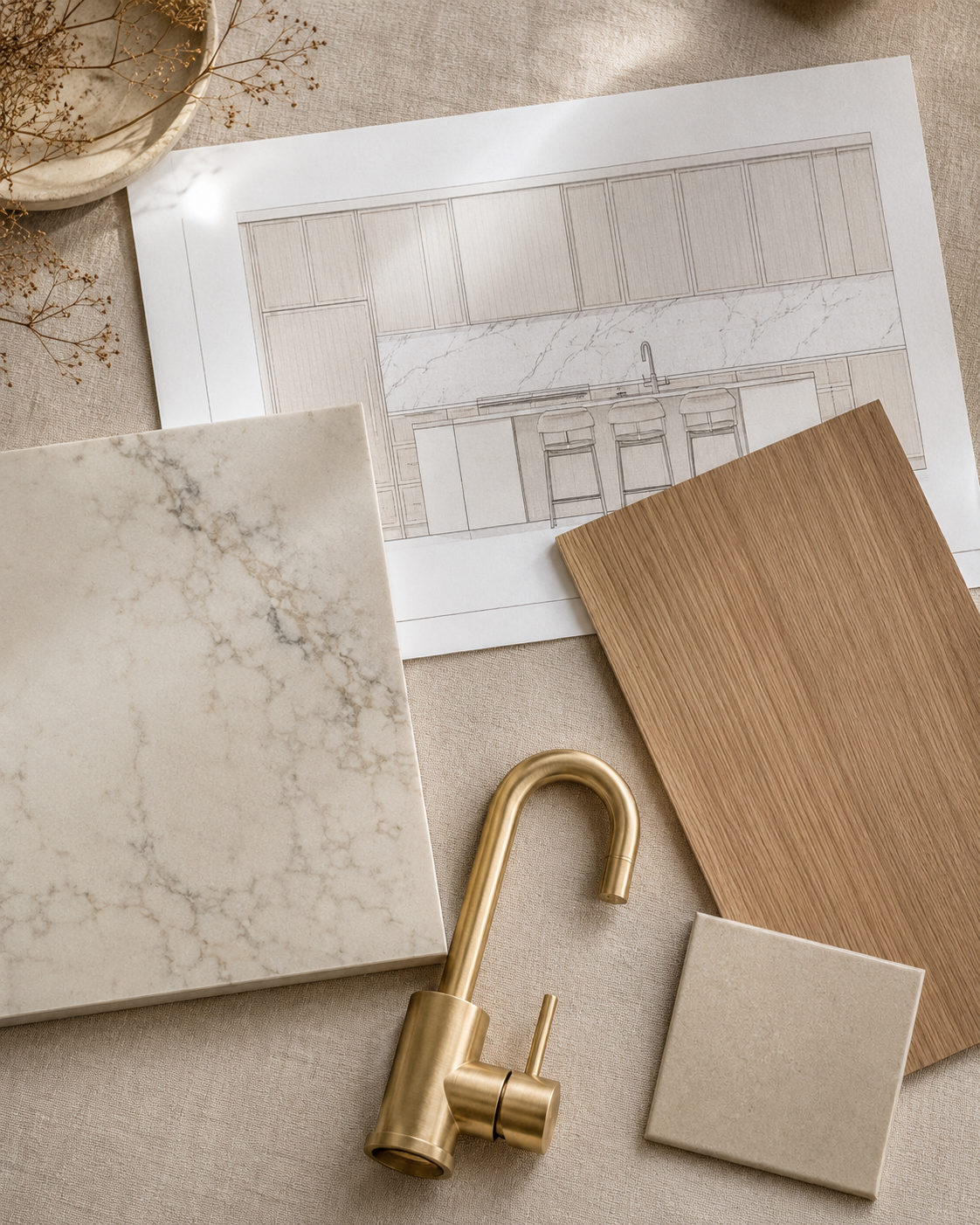
Kitchens and bathrooms tend to sit at the higher end of the per-room range, and that's rarely about size. Both rooms involve services (plumbing, waterproofing, electrical) that have to be resolved before a single tile goes down, so the documentation is more detailed than for a living room or bedroom, even when the footprint is smaller.
That whole-home range spans two quite different scopes, which is worth understanding before you compare quotes. The lower end, roughly $15,000 to $45,000, covers documentation and specification: the concept, the plans, the finishes, the joinery drawings and a handover pack your builder can work from. The upper end, $75,000 and up, is a designer who also manages the project day to day and stays involved on site through construction, rather than handing over documentation and stepping back. On a percentage fee, this upper figure is also often just what 10% to 20% works out to once a project's construction budget is large. Either way, this is the design and project management fee. Procurement, where a designer also sources and purchases your furniture and fixtures, is a separate cost again, usually its own commission on top.
The new build figure above matches the whole-home renovation figure, and that's intentional. An interior designer's own scope of work is essentially the same job whether the walls already exist or haven't been built yet. Whether you're also paying an architect or building designer for the structure itself depends on the project, not on whether it's labelled a renovation or a new build. A knock-down rebuild always needs one. A whole-home renovation that moves walls, extends the footprint or changes the building envelope usually does too. A whole-home renovation that keeps the existing layout and updates finishes and fixtures often doesn't. Either way, that fee sits separately from the figure above, and the two roles work alongside each other rather than overlapping. Mine coordinates with the structural drawings rather than replacing them.
What's Included in an Interior Design Fee?
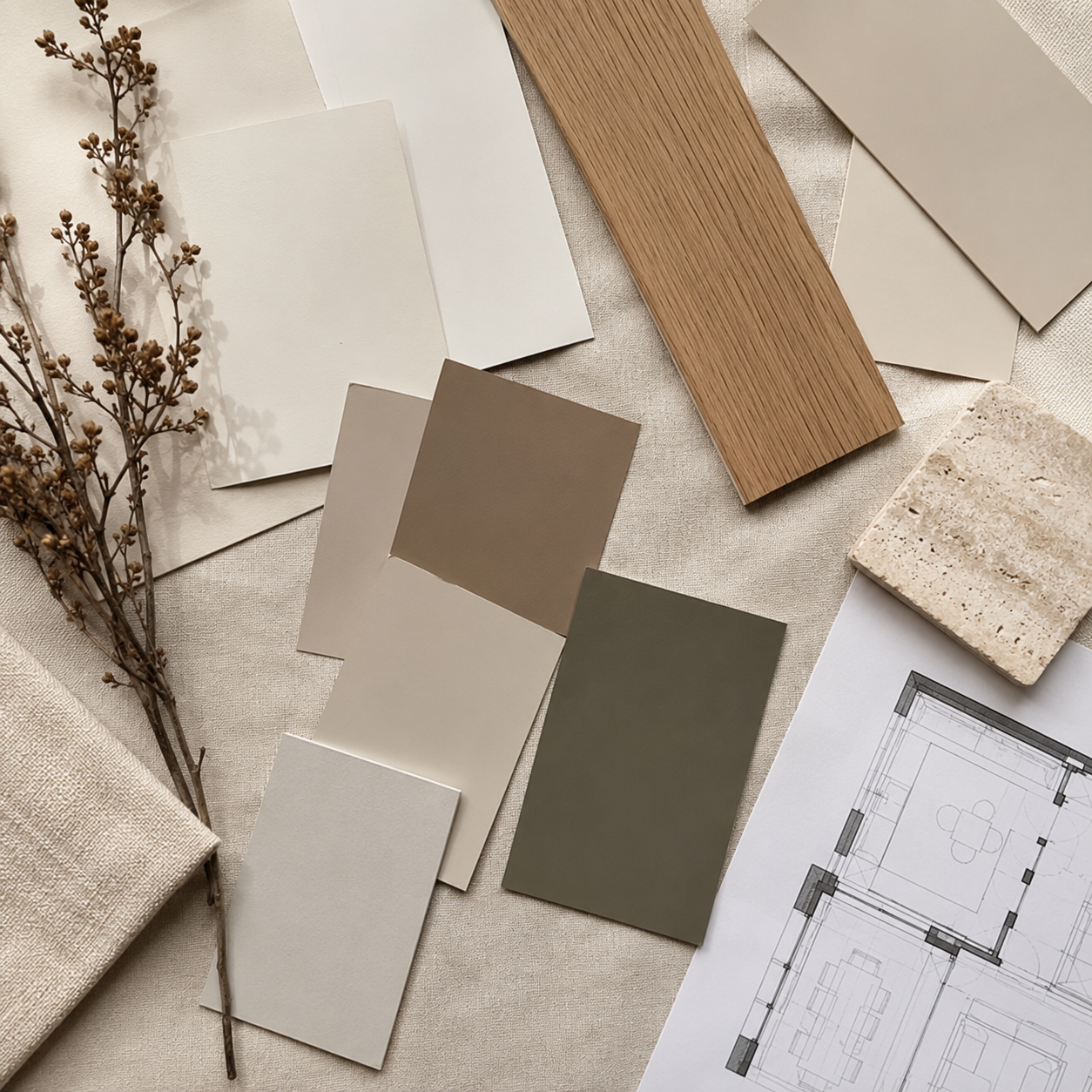
This varies by studio and package, so it's always worth asking directly, but a full-service fee commonly covers:
Client briefing and scope discussion
Site measure and photographs
Concept development and moodboards
Spatial planning and layout
Colour and material palette
Furniture and fixture selections
Joinery design (documentation for custom cabinetry)
Lighting selections, and in some packages a full lighting layout
Floor plans and elevations
Product schedules
Supplier coordination
A complete handover pack for your builder or trades
3D renders are commonly offered as an optional add-on rather than a standard inclusion. Not every package includes every item above. It's worth asking which of these are actually in scope before you compare two quotes side by side, since a lower headline fee sometimes just means a shorter list.
What Else You Might Need to Budget For
An interior design fee doesn't usually cover everything involved in a renovation or new build. Depending on your project, you may also need to budget separately for:
Drafting and building permits (for structural or planning changes)
Architectural or building design services for the building itself
Planning permits, particularly relevant for period homes or heritage overlays
Engineering, structural and sometimes services engineering
Quantity surveying
Specialist consultants where relevant (acoustic, sustainability, and similar)
Trades and construction costs, which sit separately from your design fee
Delivery, installer labour and storage for furniture and fixtures (often coordinated by the designer, but billed separately)
Do Interior Designers Charge a Percentage of the Renovation Budget?
Some do, yes. A percentage fee, commonly 10% to 20% of your construction and/or furnishing budget, is one of the more common models for larger renovations, particularly where the designer stays involved through documentation and site coordination. It's less common for a single room or a one-off consultation, where a fixed or hourly fee is more typical.
This is a different number to any procurement commission, which is charged separately again on the trade price of furniture and fixtures a designer sources on your behalf, commonly 10% to 30%. A project can involve one of these percentages, both, or neither, depending on how the designer structures their fee.
The advantage of a percentage model is that it scales with the scope. The trade-off is that your design fee can move if your construction budget does, so it's worth clarifying upfront whether the percentage is fixed to an early estimate or recalculated as costs change.
How Much of a Renovation Budget Should Go to Design Fees?
There's no official rule here, but as a rough guide, many Melbourne homeowners using a percentage-based model land somewhere between 10% and 20% of their total project cost on design fees. That figure moves depending on how much documentation your project needs, whether procurement and site management are included, and how many rooms are involved.
Rather than starting from a percentage, it's usually more useful to start from the outcome you want (a fully documented home your builder can quote and build from accurately, versus lighter-touch styling advice) and let the fee follow the scope, not the other way around.
Interior Designer, Decorator, Architect or Building Designer?
These four titles get used almost interchangeably, and that's part of why pricing conversations get confusing. They're not the same service, and they're not priced the same way.
| Professional | Typical qualifications | Typical scope | Title legally protected? |
|---|---|---|---|
| Interior designer | Bachelor's degree or equivalent in interior design | Spatial planning, joinery design, construction documentation, finishes and lighting, working alongside architects and builders | No, though the scope of work is technical |
| Interior decorator | Certificate IV or Diploma in interior decoration | Furnishings, colour, textiles and styling within an existing layout | No |
| Architect | Registered, typically 5+ years tertiary study plus supervised experience | Building design, structural planning, council approvals, full construction documentation | Yes, protected by state architect registration boards |
| Building designer | Diploma or Advanced Diploma in building design | Building design and documentation for residential projects, similar scope to an architect for many homes | Registration required in some states, including Victoria, not in others |
If your project involves structural changes, moving walls, altering the building envelope, or a new build, you'll usually need an architect or building designer in addition to, or ahead of, an interior designer. I coordinate with both regularly. My own documentation and fees cover the interior, not the structure, and I'll say so clearly at the very first conversation if your project needs a structural professional I'm not.
Is Hiring an Interior Designer Worth the Cost?
That depends on what you're comparing it to. I won't tell you a designer will save you money, because that's not always true and I don't like being sold to either.
What I can tell you is what a designer is actually being paid to do. A good designer helps you avoid a purchase you'll regret once it's in the room, resolves your layout and material decisions before a builder starts rather than while they're standing in your kitchen waiting on an answer, and keeps your finishes coordinated so the same logic runs through the whole home instead of room by room. That kind of clarity tends to mean fewer things need explaining twice to your trades and suppliers, and fewer expensive changes partway through the build.
There's also the outcome itself, not just the risk avoided. Most people know what they like when they see it, but are far less practiced at translating that into a layout, a material palette and a lighting plan that actually work together in their own home. A trained eye tends to land on combinations and spatial decisions most homeowners wouldn't reach alone, mostly because reading your own space objectively is hard, and it isn't what you do for a living.
None of that comes with a guarantee, on the budget or on the outcome. What it comes with is a much lower chance of the surprises that turn a renovation into a longer, harder process than it needed to be, and a better shot at a result you couldn't quite have put together yourself.
Why Quotes Vary So Much
If you've asked two or three designers for a rough figure and gotten back numbers that don't seem to relate to each other, you're not imagining it. A few things drive that.
The biggest one is scope. A quote that includes procurement, site visits and ongoing project management through construction will always look different to one covering documentation only, even for the same house.
Experience, the level of documentation your builder needs, and how many in-person site visits are included all move the number too. It's less about which designer is "better" and more about exactly what each quote is actually covering.
Questions to Ask Before Hiring an Interior Designer
A few questions upfront will tell you more than any headline price will:
Is this a fixed fee, an hourly rate, or a percentage of my project cost, and what happens if my budget changes?
Does the fee include site visits, and if so, how many?
Is procurement or purchasing handled separately, and is there a commission on top of trade price?
How many rounds of revisions are included before extra work is billed?
Will I receive full documentation my builder can quote from, or design direction only?
Are 3D renders, a lighting layout or joinery documentation included, or are they optional add-ons?
What happens if my project needs an architect or building designer as well, and do you coordinate with them?
What's not included in this fee that I should budget for separately?
Getting an Accurate Interior Design Proposal
The only way to get a number that actually means something is a proper scope conversation. That's true whether you talk to me or to someone else. A designer who can quote your whole renovation from a phone call is either very lucky or not looking closely enough.
At Lúrae Studio, that conversation starts with a complimentary discovery call, followed by an in-home or video consultation where we go through your layout, your budget and how involved you'd like me to be. From there, I put together a written proposal so you know exactly what you're paying for before anything is signed.
If you're weighing up whether an interior designer fits into your Melbourne renovation or new build, book a complimentary discovery call and we'll work out what your project actually needs, not just what it might cost.
Frequently Asked Questions
How much does an interior designer cost in Melbourne? It depends on the service and scope, but Melbourne interior design fees typically range from around $250 for a single consultation to $100,000 or more for a full home renovation with ongoing project management included, priced by the hour, as a fixed fee, per room, or as a percentage of your project cost.
What is the average hourly rate for an interior designer in Melbourne? Melbourne interior designers commonly charge between $120 and $300 or more per hour depending on experience, with industry pricing analysis putting the citywide average at around $210 an hour, excluding GST.
How much does an interior design consultation cost? A single consultation in Melbourne typically costs between $250 and $800 for a session lasting one to three hours. As an example, Lúrae Studio's Design Direction Session is a two-hour, in-home or video consultation priced at $530, including a written follow-up summary.
How much does it cost to hire a designer for one room? Furniture planning and selections for a single living room typically cost between $1,500 and $5,000, depending on whether the service includes a full material palette, curated product list and presentation, or a lighter-touch layout and styling brief.
How much does kitchen interior design cost? Kitchen design fees, separate from the renovation build cost, typically range from around $3,000 to $12,000 or more, depending on whether the scope includes joinery documentation, a full finishes schedule and coordination with your builder or cabinet maker.
How much does bathroom design cost? Bathroom design fees typically sit between $2,500 and $8,000 or more. Bathrooms are compact but technically demanding, involving waterproofing, tiling layout and fixture coordination, so documentation quality matters more than room size here.
How much does whole-home interior design cost? A whole-home design fee in Melbourne commonly ranges from $15,000 to $45,000 or more, or is sometimes calculated as 10% to 20% of the total project cost, depending on the number of rooms, level of documentation and degree of ongoing involvement.
Do interior designers charge a percentage of the renovation budget? Some do. A percentage-based fee, commonly 10% to 20% of the construction and/or furnishing budget, is one of several common models. Others charge hourly, a fixed project fee, or a combination of the two. A separate procurement commission, commonly 10% to 30% of trade price, may also apply if the designer sources furniture and fixtures on your behalf.
What's included in an interior designer's fee? This varies by studio and package, but commonly includes briefing, concept development, spatial planning, material and finish selections, joinery documentation and a handover pack for your builder. Extras like 3D renders or lighting layouts are often optional add-ons.
Is hiring an interior designer worth the cost? For many homeowners, yes, though not because it guarantees savings. A good designer helps you land on a layout and material palette you likely wouldn't put together alone, while also helping you avoid unsuitable purchases and reduce the risk of expensive changes once the build is underway.
What's the difference between an interior designer and an interior decorator? An interior designer is trained in spatial planning, construction documentation and joinery, and can work on structural layout changes. An interior decorator focuses on furnishing, colour and finishes within an existing layout, without changing the building itself.
How can I get an accurate interior design proposal? The only way to get an accurate figure is through a proper scope conversation, typically a paid consultation or initial briefing, where a designer can assess your property, budget and desired level of involvement before putting a fee in writing.
Figures referenced in this article are drawn from published Australian industry sources, including Bark's 2026 analysis of Australian interior design projects and the Housing Industry Association's Kitchens and Bathrooms Report, current as of publication. They are general market indicators, not quotations, and every project should be priced against its own scope.
