

Renovating a Period Home in Melbourne: What Inner-Suburb Owners Get Wrong
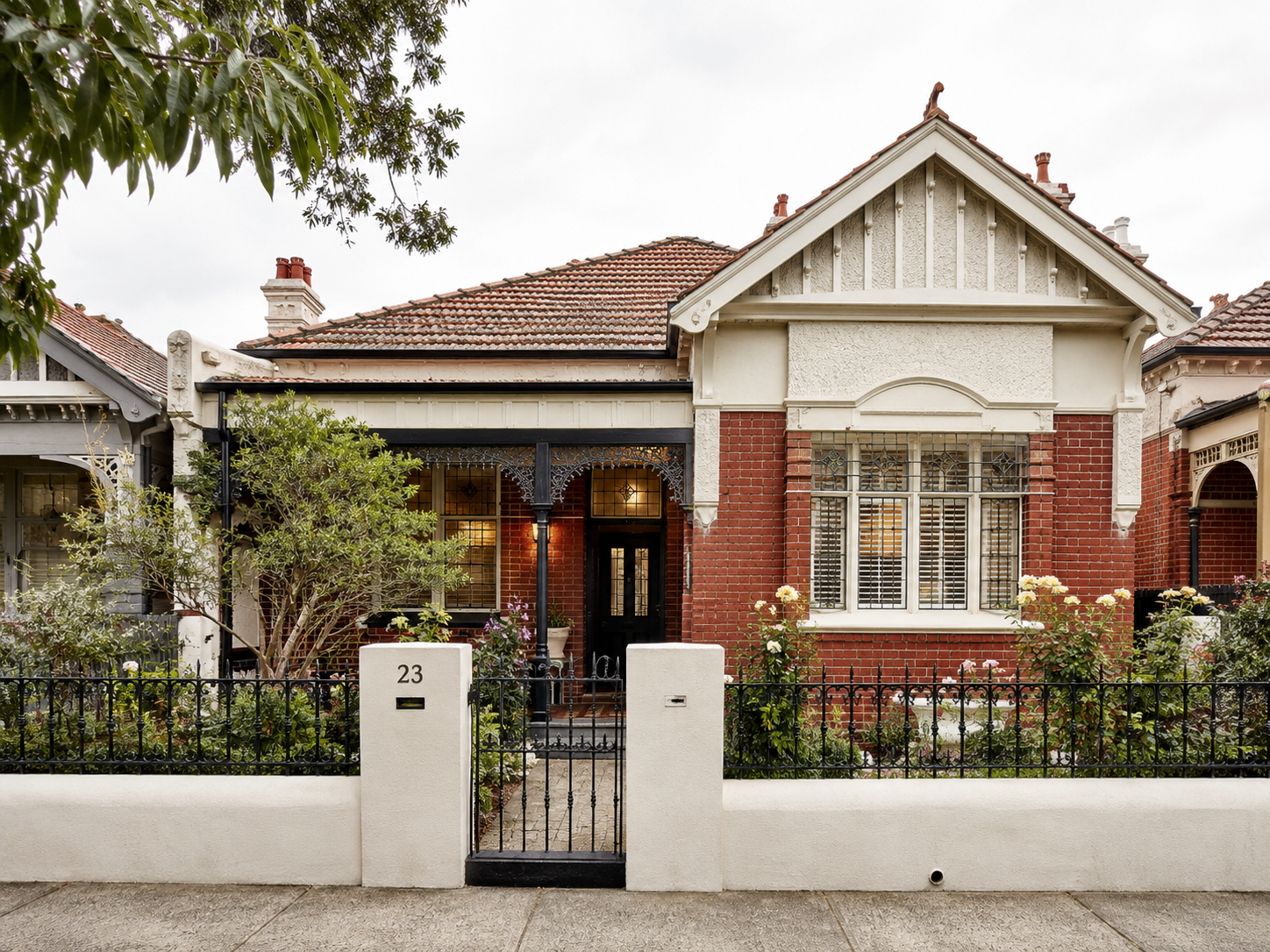
If you own a period home in Melbourne's inner suburbs, you already know it's a particular kind of project. A Victorian terrace in Port Phillip. An Edwardian in Boroondara. A Californian Bungalow on a leafy Stonnington street. These are some of the best houses in the country to live in. They're also the ones where the most expensive mistakes get made, usually by people doing their best to get it right.
The same mistakes come up again and again on these homes, and they're rarely about owners cutting corners. They come from house-proud people who love their place, want to do it justice, and make a handful of early calls that cost them later. So before you're too far down the track, here's what I'd want you to know.
Respect the heritage. Don't imitate it.
The first one is about how old and new meet. The instinct, nearly always, is to blend. People want the rear extension to look like it was always there, so you can't see the join. I understand why. It feels respectful to the house.
It rarely lands the way they hope. When you try to match a 1910 home exactly, you tend to get a slightly-off copy. The proportions aren't quite right, the brick is too clean, the skirting profile is close but not the real thing, and the eye knows. You've spent good money making the new part pretend to be old, and it can't quite pull it off.
Often the better instinct is to preserve and restore the original character where it genuinely exists, then let the extension be the next chapter of the home. So you keep the front rooms, the fireplaces, the ceiling roses, cornices, arches, skirtings and original windows, and you protect them properly. Then the addition is allowed to be of its own time.
Here's the part people miss, though. Contemporary doesn't mean disconnected. A new extension can be modern and still answer back to the original house. It does that through proportion and ceiling height, through the rhythm of the openings, through material tones and a level of craftsmanship that matches the old work, and through scale and restraint. Get those right and the result feels cohesive rather than copied. In practice that might mean detailed cornices and traditional joinery in the heritage rooms, then cleaner lines and simpler detailing in the new part, with the addition nodding to the original through timber tones, stone, colour or an arched form, without reproducing every Victorian or Edwardian detail.
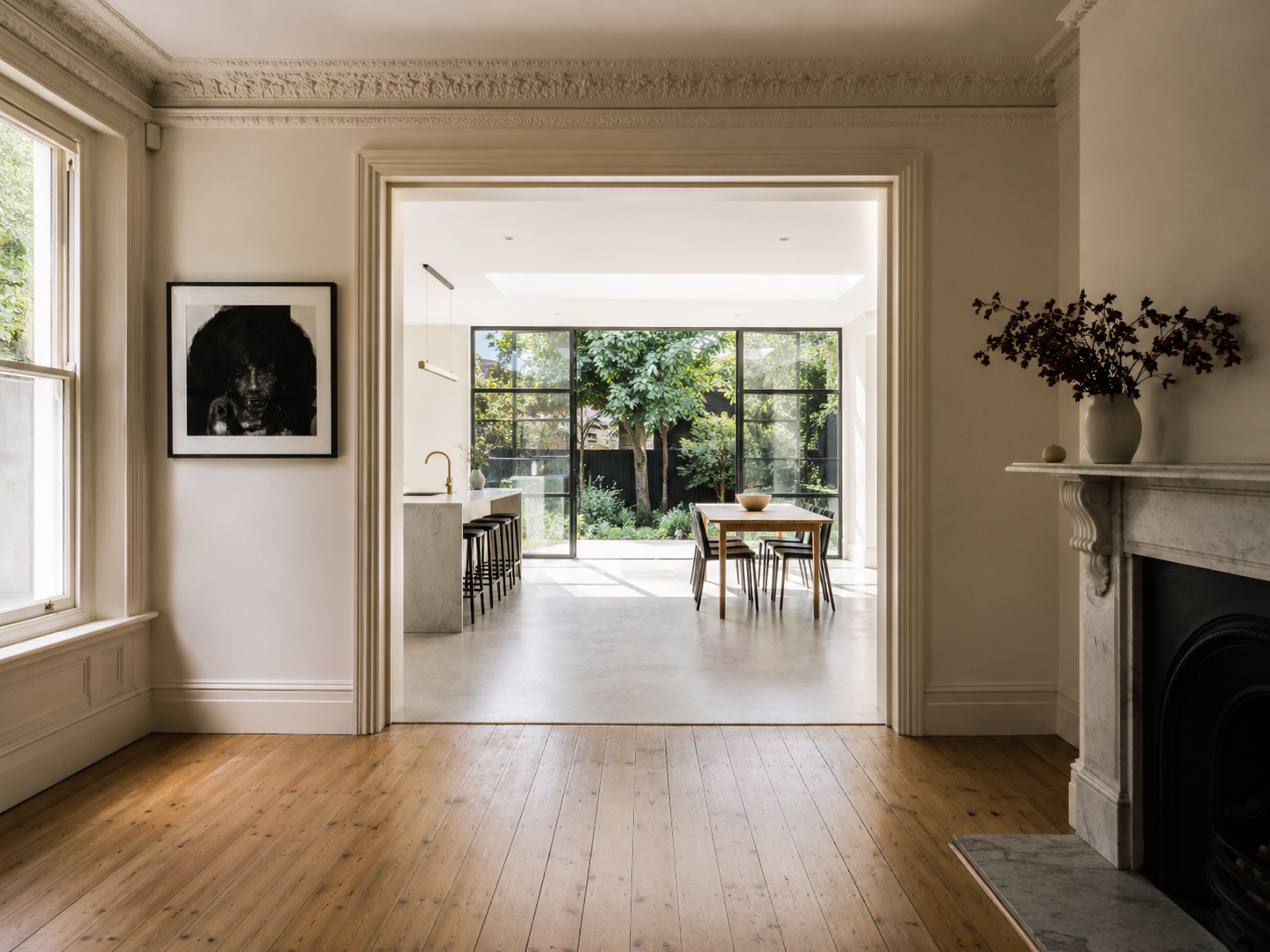
The junction between the two is worth real attention. A glazed link, a subtle shadow line, a change in ceiling treatment, or a clearly framed opening can mark the transition between the original building and the addition, so the move from old to new reads as a deliberate moment rather than an awkward seam.
And inside, the two parts shouldn't feel like two unrelated houses. You hold it together with one colour story, repeated or complementary materials, flooring that carries through, similar undertones in your metals and timber, and furniture that bridges the traditional and the contemporary. The way I'd put it: the original house and the new work should be distinct enough to read honestly, but connected enough to feel like one home.
The heritage overlay is not what most people think it is
If your home sits in a heritage overlay, and a lot of inner-suburb homes do, there's a fair bit of mythology about what that actually means. The two things I hear most are at opposite ends. Either "we can't change anything" or "it's just the front, the rest is ours to do as we like." Both are wrong, and both can cost you.
Here's the real shape of it. A heritage overlay mostly controls the outside of your home and demolition. You'll need a planning permit to demolish, to alter the building externally, usually to build at the rear, and sometimes to repaint the exterior if external paint controls are listed for your property. What it generally does not control is your interior. Internal alterations only need a permit if the schedule to the overlay specifically flags that internal controls apply to your address, and most properties don't carry that control. So the kitchen you want to reconfigure, or the wall you want to remove between two cramped rooms at the back, is often far more open to you than you'd assumed.
The part owners underestimate is demolition. People talk about "just knocking off the back" as if it's a given. Under the overlay, council has to weigh whether what you're pulling down lessens the significance of the place before it grants a permit. And not every part of your house carries the same weight. Heritage properties are graded by how much they contribute, from individually significant down to contributory and non-contributory. The higher the grading, the less you'll be allowed to change, particularly anything visible from the street.
There's also a faster lane that most owners have never heard of. Minor works in a heritage overlay can sometimes be assessed under VicSmart, a streamlined permit pathway with set timeframes and no public notice. It won't cover a big rear addition, but for smaller jobs it can save you months. Worth asking your planner about before you assume the long road is the only road.
The honest takeaway: the overlay rewards owners who understand it early and punishes the ones who find out what it says after they've already promised a builder a start date.
What to keep, and what you're allowed to let go of
There's a clear line between the things worth protecting and the things you can modernise without a second thought. Owners get into trouble when they blur it.
Keep the original detail. The tuckpointing on the facade. The tessellated tiles on the verandah. The cast iron lacework. The ceiling roses and cornices, the picture rails, the lead light, the Baltic pine floors under the carpet. The proportions of the front rooms and that long central hallway. These are the things you cannot buy back.
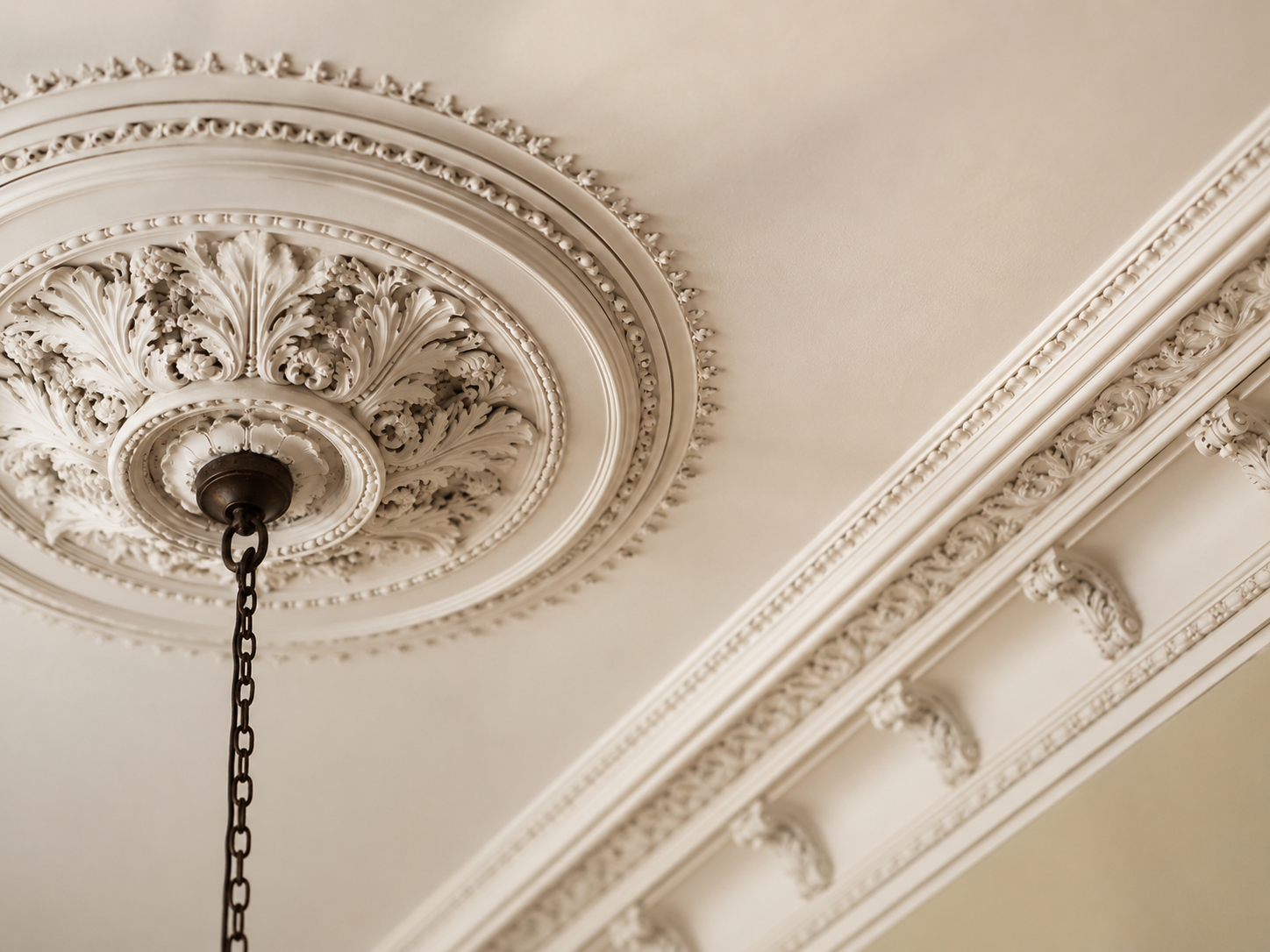
Reproduction exists, but it's expensive and it never quite reads true. Strip an original cornice out and you've spent money to make your house worth less. It happens more than you'd think: a tiled fireplace gets pulled out because it doesn't suit the new palette, and two years later there's a small fortune going into putting one back that looks half as good. Stripping period detail is almost always a financial mistake before it's an aesthetic one.
Then there's the stuff you're not just allowed but expected to update. Kitchens. Bathrooms. Nobody wants a heritage bathroom, and council isn't asking you to keep one. Heating and insulation, because these homes are famously cold and draughty and you can fix a great deal of that without touching anything anyone cares about. Lighting, which on most period homes is an afterthought waiting to be sorted. The rear layout, where the original poky lean-to was never the good part of the house anyway. This is where you make the home work for how people actually live now, and where holding onto the original for its own sake just leaves you with a beautiful house that's miserable in July.
The mistakes that cost real money
Most of the budget blowouts on these homes are set in motion before a builder is ever appointed. A few in particular.
The biggest is appointing the builder before the design and the documentation are properly done. When the drawings are thin, the decisions get made on site, and on-site is the single most expensive place to make a decision. Every "we'll figure it out when we're there" is a variation, and variations are where renovation budgets quietly double. Get the thinking done on paper, where changing your mind costs an eraser instead of a day rate for three trades standing around.
Next is the demolition assumption. Someone decides the back is coming off, the builder prices the job on that basis, and nobody checks the overlay. Then council has a view, the plan changes mid-project, and you're paying to redesign something that's already half-quoted. Find out what you can and can't demolish before it's load-bearing in your budget.
Then there's stripping original features early to "deal with later." Later costs more, both to reinstate and at resale. If you're unsure whether something stays, the cheap move is to leave it in place until you are sure.
Underestimating what's behind the plaster is another one. These houses are old. There are restumping surprises, knob-and-tube wiring, old chimneys, asbestos in the eaves and old linings, rising damp in the brickwork. None of it shows up in a glossy inspection and all of it shows up once the walls are open. Build a genuine contingency into your budget, not a token one.
And the quiet one that catches careful people out: designing as if the house is square and level. It isn't. A hundred-year-old home has moved. Floors fall away, walls bow, nothing is plumb. Joinery and tiling priced as if everything's true will blow out the moment it meets the actual building. A good measure-up early saves you that argument later.
Last, leave room in your program for the permit. Council takes the time it takes, and people consistently plan as though approval is a formality that happens overnight. Build the heritage timeline into your schedule from the start, so you're not paying to hold a builder while you wait on a planner.
One person who sees the whole picture
The thread running through all of this is that the costly mistakes happen in the gaps. Between the design and the build. Between what you assumed about the overlay and what it actually says. Between the trade who's looking after their part and the bigger question of whether the whole house holds together. Period homes have more of those gaps than a new build, because there's more history to respect and more that can go wrong behind a wall.

That's the work I do. I design these homes and I lead the project the whole way through, so the person who understood why we kept the cornices is the same person standing in the room when the builder asks what happens next. On a house this particular, that continuity is worth more than any single decision.
Even if you're just starting to think about it, an early conversation can save you most of the mistakes above.
Book a 15-minute discovery call and I'll tell you what I'd watch for on your place. No commitment, just a chat.
